









Legal
Continued Activism Is Vital for the Future of Global Cannabis
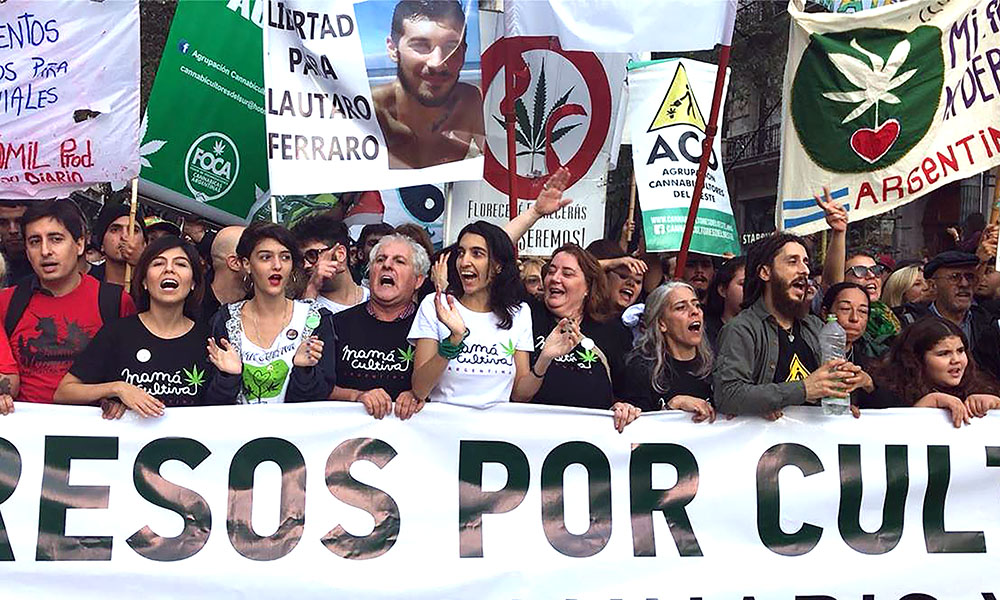
Several jurisdictions around the world now permit some level of legal cannabis activity by consumers, patients and, in some cases, entrepreneurs. In places where cannabis is legal for medical or adult use, there has never been a better time to be a cannabis patient or consumer since the dawn of cannabis prohibition. Those freedoms did not come about randomly. They were only achieved thanks to the tireless efforts of local cannabis activists, and it is important that, as the global cannabis industry continues to spread, activism efforts continue.
While it is hard to pinpoint the first official cannabis activism effort, it is a safe bet that many such efforts began immediately and simultaneously after jurisdictions around the world enacted prohibition. Cannabis prohibition has been a harmful public policy since the very beginning, and sensible people with compassion and empathy have pushed back against it in various ways.
The First Major Cannabis Reform Victory
The first major cannabis reform victory occurred in 1973 in the State of Oregon when lawmakers approved a cannabis decriminalization measure. For the first time in nearly four decades in the United States, consumers no longer faced jail time for possessing a personal amount of cannabis (one ounce) in Oregon. Instead, they were fined and faced no criminal charges.
Another major cannabis reform victory occurred in 1996 in California when the state’s voters approved Proposition 215, making California the first state in the U.S. to legalize medical cannabis. Suffering patients in California were finally able to gain safe access to their medicine without fear of any penalty. The Proposition 215 victory ushered in a new era for state-level medical cannabis legalization in the U.S., and by extension, inspired countries around the world to enact medical cannabis policy modernizations of their own.
The next frontier for cannabis policy modernization came in 2012, when Colorado and Washington State both adopted adult-use cannabis legalization measures on Election Day. The following year, Uruguay made history by becoming the first country to adopt a national adult-use cannabis legalization measure.
Cannabis Wins of Today
Zoom forward to today, and several countries have adopted national recreational cannabis legalization measures. Canada, Malta, Luxembourg, Germany, South Africa, and the Czech Republic have all joined Uruguay in adopting such measures, with Czechia’s law scheduled to take effect on January 1, 2026. All of the victories that have piled up came about as a result of the work of passionate cannabis advocates.
The collective cannabis community mustn’t get complacent and make the mistake of taking newly afforded freedoms for granted. Just because medical and adult-use policy modernization victories have been achieved does not mean that there is no chance of policy regressions. One needs to look no further than Thailand to find a real-world example of this phenomenon occurring.
Lawmakers in Thailand approved a historic cannabis measure in 2022 that yielded exponential growth for the nation’s emerging cannabis industry. Thailand’s Narcotics Law was amended in 2022, resulting in cannabis being removed from the nation’s list of controlled drugs. That led to the country becoming one of the top cannabis tourism destinations on the planet.
Some Cannabis Laws Regressing
Unfortunately, the Pheu Thai party eventually won control of the nation’s government and tightened regulations earlier this year. The policy change banned retailers from selling cannabis to customers without a prescription and reclassified cannabis as a controlled substance. Ongoing efforts are underway to take cannabis laws and regulations backwards in other jurisdictions as well.
One of the most noteworthy examples is in Germany, where the Federal Cabinet recently approved a measure that would amend the Medical Cannabis Act (MedCanG). The measure was drafted by the Federal Ministry of Health (BMG), and if approved, would require personal contact between the patient and doctor before a cannabis prescription can be approved. Restrictions on mail-order medical cannabis are also part of the proposal. Both changes would negatively impact suffering patients, particularly patients who live in rural areas or have mobility limitations. The proposal is sure to be a top focus at the upcoming International Cannabis Business Conference in Berlin on April on April 13-15, 2026.
Even in the United States, where two dozen states have adopted adult-use cannabis legalization measures, efforts are in full swing to reverse state-level legalization provisions. For example, in Ohio, the House of Representatives recently approved a measure that, while not a full legalization reversal, would revise the state’s legalization law to remove certain protections of adult-use cannabis activity. Cannabis opponents are waging a citizen initiative in Massachusetts that seeks to drastically roll back that state’s legalization model as well.
The Battle Presses On
These are just a few examples of efforts by cannabis opponents to reverse the progress that cannabis advocates have made in recent years. All such efforts serve as reminders that the battle is never over when it comes to cannabis reform, and cannabis patients, consumers, and advocates need to refrain from getting too comfortable. Always keep fighting for sensible cannabis policies. The future of cannabis depends on it.