






Politics
Texas Cannabis Policy Is at an Inflection Point
Court rulings, regulatory shifts and market pressure are forcing Texas to confront cannabis policy questions with national implications.
For much of the last decade, Texas has occupied a contradictory place in the U.S. cannabis landscape. It maintains one of the nation’s most restrictive medical cannabis programs and enforces strict marijuana prohibition, yet quietly became a national powerhouse in hemp production after the 2018 Farm Bill. The result is a fragmented system defined by legal gray areas, regulatory tension, and growing distance between statute and reality.
That tension is now coming to a head.
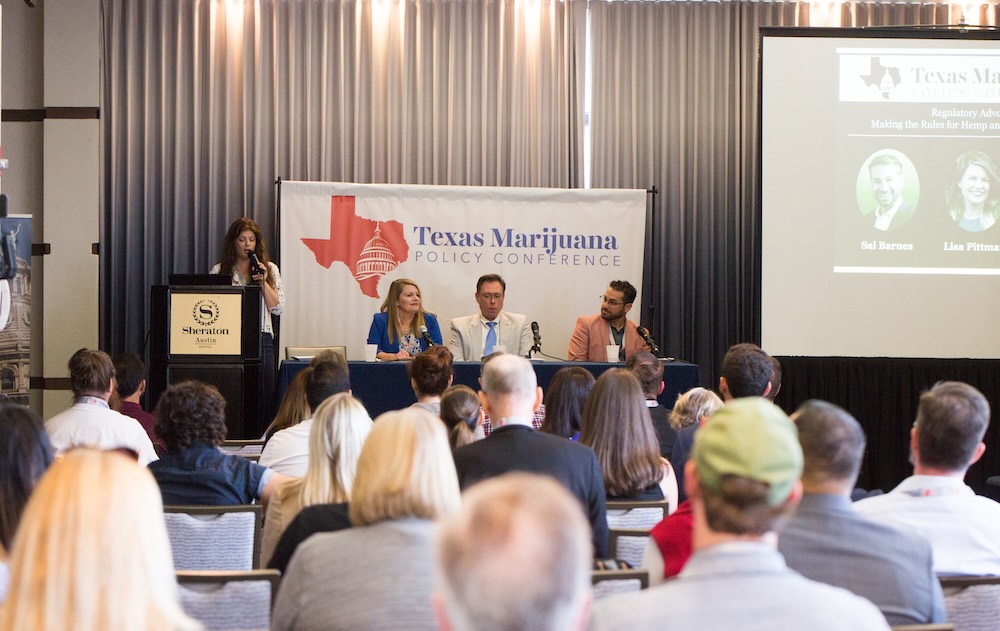
From January 29–31, policymakers, prosecutors, scientists and public health experts will convene in front of a sold-out audience at the University of Texas at Austin for the Texas Cannabis Policy Conference. The timing is notable. Many observers view this moment as a turning point—not only for Texas, but also for other prohibition-era states struggling to reconcile outdated frameworks with modern market and public health realities.
Unlike trade expos or advocacy events, the conference is designed as a nonpartisan, policy-focused forum. The purpose is not to promote products, but to examine how cannabis policy functions and where it may be headed amid mounting regulatory and cultural pressure.

Why Texas Matters Right Now
Texas rarely moves first on cannabis. But when it does move, the consequences are outsized. With nearly 30 million residents and significant influence across the South and Midwest, Texas policy decisions tend to reverberate far beyond its borders.
Several forces are converging at once. A pending Texas Supreme Court case could significantly reshape how hemp-derived THC products are regulated and enforced statewide, particularly those that fall into legal gray areas under existing law. At the same time, the Texas Department of State Health Services is advancing major rulemaking for the Consumable Hemp Program, proposing expanded oversight, recall authority, enforcement mechanisms and new fee structures.
Supporters argue these changes are necessary to protect consumers and impose order on a chaotic marketplace. Critics counter that overly aggressive regulation risks destabilizing compliant businesses and driving consumers toward illicit markets, a familiar warning in cannabis policy nationwide.
Compounding these state-level developments is ongoing federal uncertainty. While hemp remains federally legal, shifting enforcement priorities and regulatory interpretations have created confusion across the country. For Texas, which built a massive hemp economy in just a few years, those shifts raise urgent questions about sustainability, public safety and economic risk.
A Rare Policy Cross-Section
What distinguishes the 2026 Texas Cannabis Policy Conference is the speaker lineup, which brings together voices that rarely intersect in public cannabis discussions: legislators, local officials, prosecutors, regulators from other states, medical professionals, scientists, attorneys and public safety experts.
Texas State Representative Drew Darby, who helped reshape SB 3 from a proposed hemp ban into a regulatory framework, will address the political realities that shape cannabis legislation. State Senator Nathan Johnson will discuss the importance of data-driven policymaking and durability when laws are tested in both courts and practice. Dallas City Council member Adam Bazaldua will speak to local enforcement challenges, including tensions between voter-approved decriminalization measures and state resistance. District Attorney Sarah Stogner will offer a prosecutorial perspective grounded in real-world enforcement outcomes.
The conference also includes regulators and operators from other states, giving Texas officials rare access to lessons learned elsewhere.
From Ideology to Infrastructure
The emphasis throughout the conference is implementation, not ideology. Sessions focus on how policy decisions translate into practice: how recalls function, how enforcement priorities are set, how fees and licensing structures affect compliance, and how regulatory design shapes patient access.
With more than 20 sessions across two days, programming prioritizes substantive discussion over sound bites. For an industry long defined by polarized rhetoric, this shift toward governance and infrastructure is meaningful; it reflects a recognition that cannabis policy in Texas is no longer theoretical. It is operational.

A Signal Beyond State Lines
The conference also reflects a broader national moment. Across the country, prohibition-era states are grappling with similar challenges: regulating hemp-derived products, managing limited medical programs, balancing public safety with market realities, and avoiding mistakes made elsewhere.
Texas is not alone. But it is one of the last major states where these questions remain unresolved at scale. For patients navigating limited access, businesses operating in regulatory limbo and communities affected by uneven enforcement, the cost of incoherent policy is real. Bringing these conversations into an academic setting, grounded in law, data and lived experience, signals a maturing dialogue.
The Texas Cannabis Policy Conference does not promise easy answers. But it does something essential: It creates space for informed, cross-sector conversation at a moment when inaction is no longer viable.
Whether Texas is ready to move forward remains an open question. But for three days in Austin, the people most responsible for shaping that future will be in the same room and the conversation, at least, is underway.
Join the sold-out event via the free livestream.