






Q&A
Q&A: Christine Apple on Grön’s Next Chapter With Wyld
From an Oregon kitchen to a national platform, Apple shares the story behind Grön’s growth—and why Wyld is the right partner to scale with.
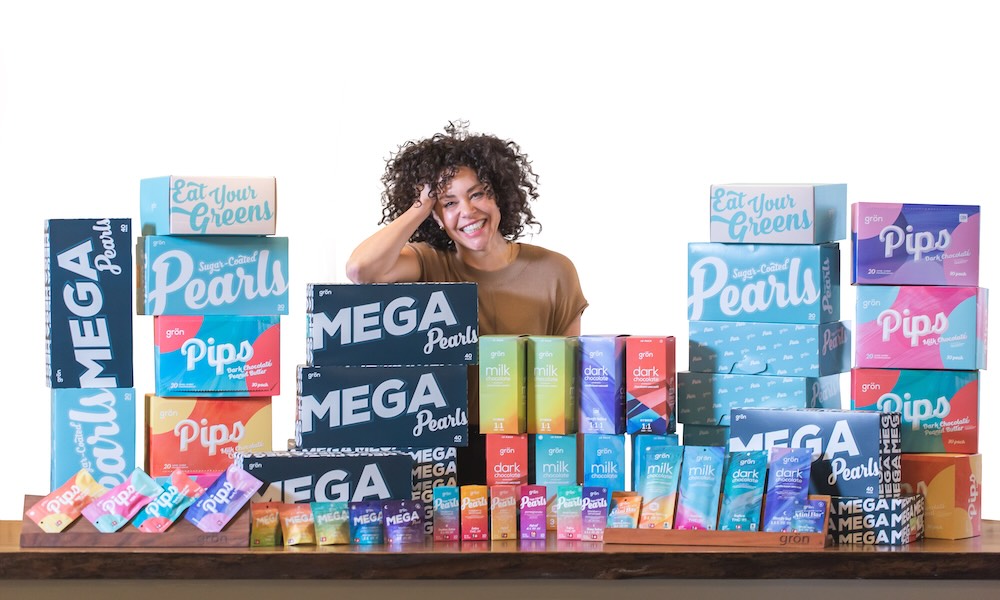
On Monday, January 5, leading cannabis edibles company Wyld announced the acquisition of Grön, a women-led brand focused on creating delicious, handcrafted, cannabis-infused edibles. The deal brings together two of the most recognized and respected names in edibles—both from Oregon—combining Grön’s premium, innovation-driven portfolio with Wyld’s extensive distribution reach across North America. According to the companies, the partnership is designed to accelerate growth while preserving what makes each brand beloved by consumers—a shared commitment to quality, creativity and authenticity.
“This acquisition is about scaling a brand that’s already winning,” stated Aaron Morris, founder and CEO of Wyld in Monday’s press release. “Grön has built exceptional products and a deeply trusted brand. Our goal is to support its continued growth by pairing Grön’s creativity and innovation with Wyld’s infrastructure, reach and operational strength—without compromising what makes Grön special.”
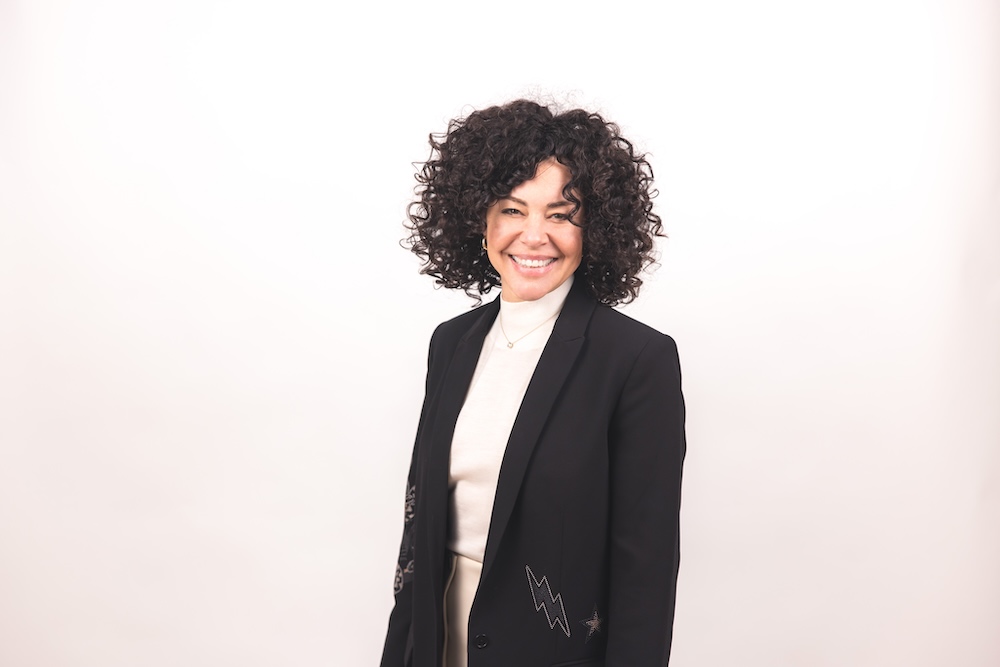
Grön Founder and CEO Christine Apple is equally excited about the company’s future. When deliberating on how to grow the brand so that it can carry on for generations, Apple asked herself, “What is the brand’s best opportunity for success to continue to grow and grow rapidly?” She concluded that “Wyld has the platform to be able to do that, and they’re the only company, I think, in this entire space, that can do it better than I can. And I mean that.”
Beyond Apple’s belief in the power of the Wyld brand and infrastructure to expand, Apple, perhaps more importantly, is in line with Morris’ vision. “I couldn’t imagine someone that I could trust more to carry this brand forward,” she candidly shared in a conversation with Cannabis Now’s own founder and CEO, Eugenio Garcia, on Tuesday. “We share a lot of common values, and he’s really committed to keeping the brand as it is.”
Join us as Apple takes us down memory lane, back to her Oregon kitchen when only medical cannabis was legal, and weed was far less socially acceptable. Apple shares insight on how she’s found success by staying lean, efficient, privately funded and “laser focused” as well as her unwavering passion for Grön—“her baby,” so to speak—and all that the brand represents. It’s certainly been a labor of love over the past decade, and now she’s finally ready to let Grön leave the nest and soar to new heights as the legacy carries on.
Eugenio Garcia: To kick things off, can you share Grön’s origin story?
Christine Apple: So, I am a recovering architect. I joke about that. I graduated from architecture school at the University of Texas in ‘99 and moved up to Oregon and started working at an architecture firm, and did that for about 16 years, 14 years—something like that.
On a whim, I started making chocolate edibles in my home kitchen, just dinking around. What started as a side project kind of grew into a monster in all the best ways. I actually had a day job as an architect, and I would make chocolates at night and back then it was medical days, but [cannabis] wasn’t legal, or “adult-use.” From the social side, it was frowned upon, so I was kind of living a double life.
At some point—I think 2014 in Oregon—they passed adult-use, and I took a gamble and cashed in my stock options and left my architecture firm and bought chocolate machines and said, “I’m going to give this a go.” We’ve really not taken any outside capital until this past year, which has been probably one of the defining factors of our success, because the industry is so volatile. We’re very lean. We run a really efficient machine. And yeah, it’s been the journey of my life, that’s for sure.
EG: Wow, good for you. What is the current footprint of the brand?
CA: We are in nine states right now—Oregon, Arizona, Nevada, Ohio, Missouri, Illinois, Pennsylvania, New York, New Jersey. We’re currently in the process of relaunching Nevada and Canada. I think our penetration across the markets that we’re in is well over 75% on average; most states we’re closer to 90%. We’re the number one edible up in Canada as well. Grön is on a on a tremendous growth trajectory. The time was right to be able to leverage the distribution channels and the real platform that Wyld is able to offer to continue to grow the brand.
EG: What does the name Grön mean? Does it have any significance?
CA: It does. So I studied abroad in Scandinavia during college [for architecture], and it means “green” in Swedish. It’s simply the word “green.” The funny thing about this is, there was no business plan, there was no intent to start a business—I just started making chocolate. Then I had to come up with a name. It was an hour-long exercise coming up with things that were meaningful to me and looking at cool words. I was researching chocolate companies, and if you think of all the interesting chocolate brands, a lot of them have words that are hard to pronounce. From this side of the world, sustainability is important, and it’s green for the plant. Grön is kind of a cool word that’s a little difficult to say and the umlauts make it fun, although difficult to type.
EG: I love that. And although you’ve expanded from chocolates, Grön soley offers edibles, right?
CA: Yes, we’ve stayed laser focused. And I think again, that’s another real strong point to the company and our success and profitability—staying really laser focused and building the brand. I can look back on it now and say it takes a long time to mature a brand to a place where it’s really a brand—a brand isn’t a brand if you don’t recognize it and people aren’t following it and really understanding it and believing in it, and it takes years to generate that kind of trust.
EG: Moving into Grön’s next chapter, how did you and Wyld’s CEO Aaron Morris come to meet?
CA: So both Grön and Wyld grew up during the Oregon medical days, so my founder’s story is not very different from his. It was the same timeline. He and I have lived in Portland for the entire duration of these companies’ existence, and we had never met in person until about six months ago. Seth Yakatan, a dear friend, actually introduced Aaron and Draper Bender, president of Grön. They went for coffee, and Draper came back to me and said, “I have an idea. What do you think about this?” I said, “No way. You’re out of your mind.” And then I slept on it. And, you know, the reality is, both these companies—everyone in this industry—is trying to figure out what to do next.
For years, we’ve been expanding into new markets, and that’s a great strategy until you run out of new markets to open, and then you’ve got to figure out how to grow. And this industry is just really stifled by the federal legislation. Wyld has gone to all the states, and they dominate in all the states, but they need to figure out how to continue to grow, too. We have conquered all of the new states, but we kind of passed over those older legacy states that are more saturated like California, Colorado, Washington and Michigan. It’s time for us to figure out how to enter those markets. The reality is: Wyld is the largest player in all those markets.
There are so many similarities with what these companies are it just, it really makes sense with the synergies between the two companies, both being Oregon-based, and we share a lot of common values, and he’s really committed to keeping the brand as it is. I couldn’t think of someone that could be better positioned to carry it forward.
EG: It’s January 2026 and we have the pending completion of Trump’s executive order to reschedule cannabis that he announced at the end of last year. How has that announcement changed your 2026 plans or affected your business?
CA: It hasn’t affected us at all to be honest, you know, we’re a private company. There’s been news and talk for years and years and we kind of just blur out the noise and keep moving forward. For us right now, it’s strictly business as usual, delivering excellence and bringing products to the people who want them. That’s what we do.
EG: With Grön, we’ll go back to your slogan, “the best-tasting edible on the planet.” Where does that come from? Is it in the ingredients? Is it the process? How do you live up to that?
CA: Well, from the very beginning, when I started making chocolate at home, one of the reasons that the product took off was because it actually tasted good. And edibles are traditionally not very good. They taste like weed. And you’ll never make something taste better by adding cannabis to it. It’s my opinion, and there may be some people that disagree with that, but I think the majority of people agree.
There are three pillars to any product success: It has to taste good, look good and feel good. And you have to hit all three pillars. Every product that we make, that we put on market, has to. So, we’ve spent a lot of time with flavor and terpene profiles and adding different levels of acidity, which counters the cannabis flavor. It’s been a really fun journey.

EG: A lot of conversations I’ve had in 2025 with industry leaders have been surrounding this big question of “How do we survive? How do we thrive?” It’s been a bit of a challenging four years for a lot of companies and leaders, and one of the answers to that was, “It’s time to team up.” It’s time to create alliances and think of business more in that vein rather than people playing in their own silo. And so, with your decision to team up with Wyld, what were some of the biggest decision-making factors behind that?
CA: Everything that I’ve done with this brand from the time it started has been intentional, and it’s to put the brand first so that it can carry on for generations. I look at where it’s at now, and I said, “What is the brand’s best opportunity for success to continue to grow and grow rapidly?” Wyld has the platform to be able to do that, and they’re the only company, I think, in this entire space, that can do it better than I can. And I mean that. I believe Aaron can do this better than I can, and he will accelerate the brand’s growth.
I am Grön’s biggest fan, and I will be her cheerleader until I die, and I want to see this brand carry on as a legacy brand in this cannabis space. This industry is still really young, and there’s a lot of volatility, and most brands won’t make it. You saw it with the tech world. Who’s left? Google? I want Grön to be a lasting brand. And selfishly, that is what’s critically important to me: setting her up for long term success. And I believe that this does that. So I’m really pleased that we were able to pull this together.
Remarkably Grön and Wyld, don’t eat each other’s market share on shelves. When we go to markets together, we actually grow the category, so we’re bringing consumers in. We see it in all the all the markets that we’re in, it’s remarkable. Combined, the two companies are close to 30% of the market.
EG: You’ve spoken of Grön as a “she,” giving her an identity. How did you come up with that?
CA: Well, probably because I reflect a lot of birthing and raising this company as if I’m raising a child. This has been 11 years of my life—fully committing this brand to a point where it can stand on its own and has the stability and an identity of her own. And, she is female. She’s fun, and, I mean the brand has a has a personality. It helps us connect with consumers. There’s not a lot of females in this industry, and Grön is one of ‘em.
EG: What’s one of the most important things in creating a brand identity and differentiating yourself?
CA: What’s so important is finding something that is relatable to people. People follow brands that they love and trust. It’s a commitment to clean, honest, transparent communication, and that comes through your marketing and the relationships you have with consumers and retailers. I think part of our reputation in the industry has come from that—making sure that we’re being honest, that we’re delivering excellence every single time, that we take care of people and that we take care of our products and that we’re being good stewards of the planet. All of those things come through, and people like it. People want to buy things they like and believe in.