








Drakken Glass: Making Magic
Drakken Glass turns heat, mythology and technical precision into a viral moment and a statement on the future of cannabis craftsmanship.
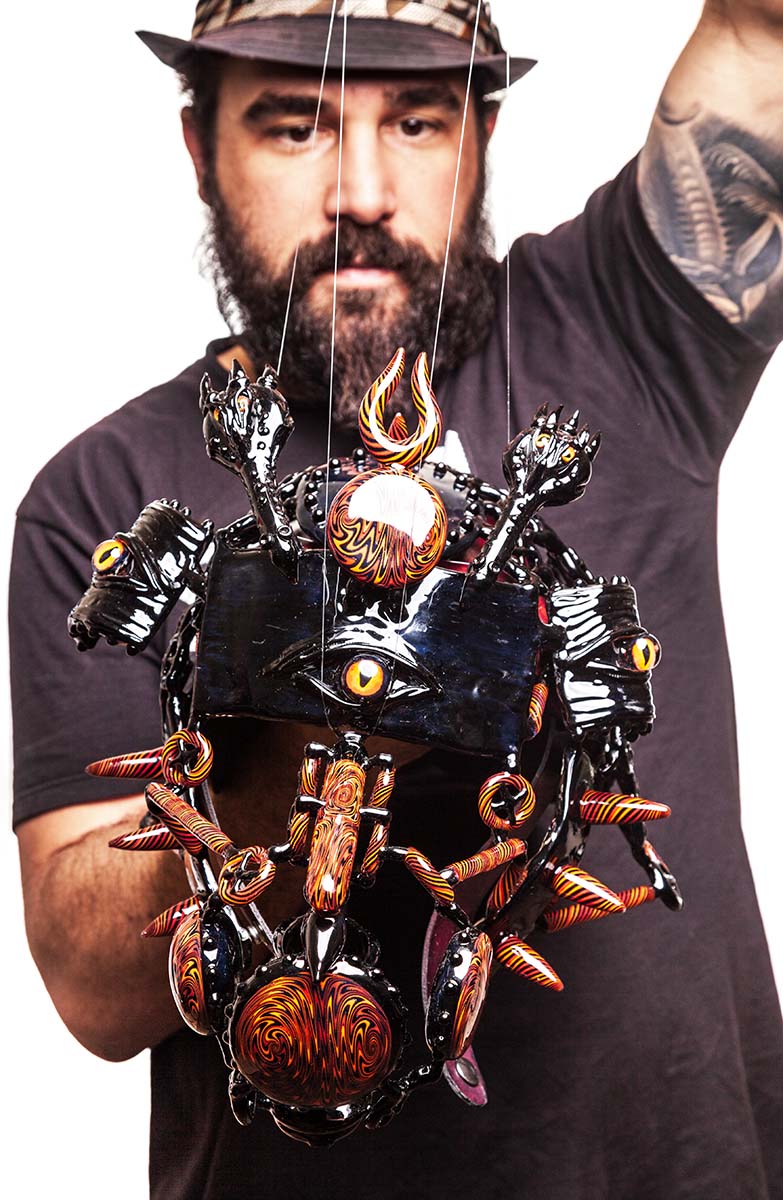
The art of glassblowing dates back thousands of years. The required skill and control drew praise for centuries as both a technical feat and a form of creative expression. In cannabis culture, glass is a symbol shaped by decades of creativity, rebellion and innovation. Robert James Raymond, a.k.a. Drakken Glass, a self-taught artist based in Las Vegas, represents that legacy by pushing the limits of what glass can be.
Raymond says his love of glass began in childhood when he collected marbles and Venetian glass beads and turned them into jewelry. By 2007, his curiosity turned into dedication. With $1,000 and no formal training, he bought a torch, set up a modest workspace and began experimenting. “I wasn’t brought into somebody’s studio,” he says. “I just bought the tools and started experimenting.”
That independent way of thinking is part of cannabis’ counter-culture roots. Before legalization, glass was a key part of how cannabis was used and expressed. “Glass and cannabis grew together,” Raymond says. “The art helped push the culture forward.”
Over time, this connection elevated glass from a simple tool to collectable art. Techniques evolved, designs grew more intricate, and ownership became a form of cultural participation. Now, though, Raymond says the market is filled with cheap, mass-produced imports, often undercutting independent artists. For those artists, the challenge goes beyond competition. The cost of materials, fuel and equipment continue to climb, while buyers expect to pay less thanks to a market flooded with cheap imports. Glassblowing itself remains unforgiving. Pieces might crack from uneven heat, break while cooling or fail at any step of production. “Everything is extremely specialized and expensive,” he says. “And there are just so many failure points.”
Unlike digital mediums, there’s no way to undo mistakes. “As an artist, we can’t just push the back button,” he says. “If we mess up, it could be the loss of the entire piece.”
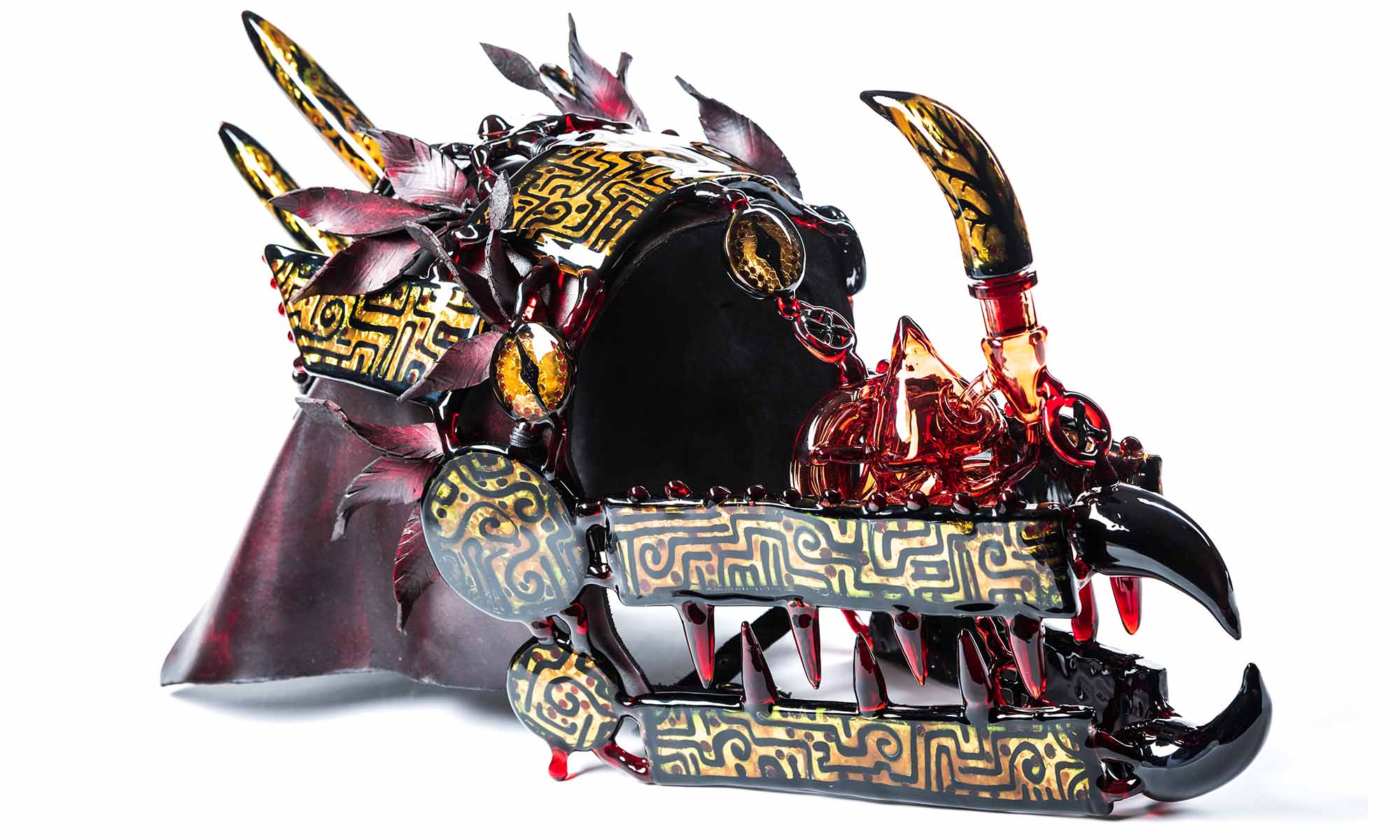
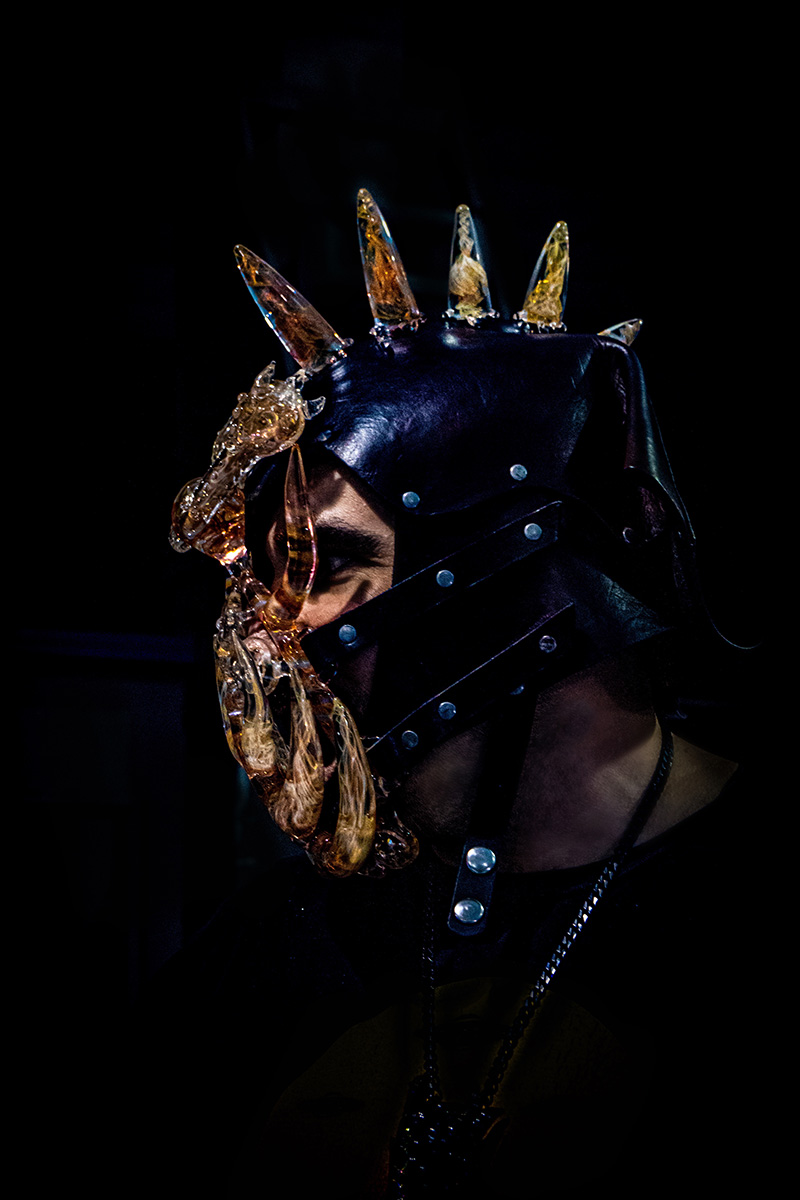
This balance between risk and reward is precisely what defines the craft and gives it value. Nowhere is that more evident than in Drakken Glass’ dragon mask, a wearable glass sculpture inspired by the Aztec feathered serpent and other mythologies. The mask went viral, amassing more than 70 million views online. Made with layers of glass and gold, it needs careful heat control and timing at every stage. It takes weeks to build and evinces years of skill.
Creating glass at this level is physically demanding. “There’s a tremendous amount of heat,” Raymond explains. “You have to have a high pain tolerance.” Glass must be shaped at temperatures above 1,000 degrees, which means artists must constantly manage heat distribution. One mistake can ruin the whole piece.
artists such as Robert James Raymond bring something
harder to replicate.
Raymond believes this difficulty is part of what makes the mask special.
Its success shows something deeper: As the world moves toward speed, convenience and digital production, people still value things made by hand. That contrast is becoming even more pronounced as artificial intelligence reshapes creative industries. Glass, by its nature, resists that shift. It’s an inherently analog process—demanding presence, focus and physical endurance.
“There’s a very deep sort of spiritual connection I feel to the creativity of the universe when I do this craft,” Raymond says. That sense of connection drives his work forward. Beyond glass, Drakken Glass experiments with leather, wearable design and sculptural forms, constantly expanding the medium’s possibilities. His goal is not perfection, but progress. “You’re always learning, you’re always exploring,” he says.
In an industry increasingly driven by scale and efficiency, artists such as Raymond bring something harder to replicate. Their work shows history, personal touch and the risks of making something by hand.
In the end, glass isn’t shaped by fire alone, but by vision, discipline and community. It’s a reflection of the culture behind it. Through his work, Drakken Glass continues to push both the medium—and that culture—forward.
Originally published in Issue 53 of Cannabis Now.